木星 ALPO-Japan Latest

Jupiter Image 2026/01/20(UT)
阿久津富夫,伊藤了史
Mike Karakas,Olivier Meeckers,Christofer Mauricio Baez Jim,Raul Cantemir,Avani Soares
M.Karakas,O.Meeckers,T.Akutsu,C.Baez,S.Ito,R.Cantemir,A.Soares
Attached are my images from last night. Seeing was still variable,but fortunately there were also times of stable conditions.
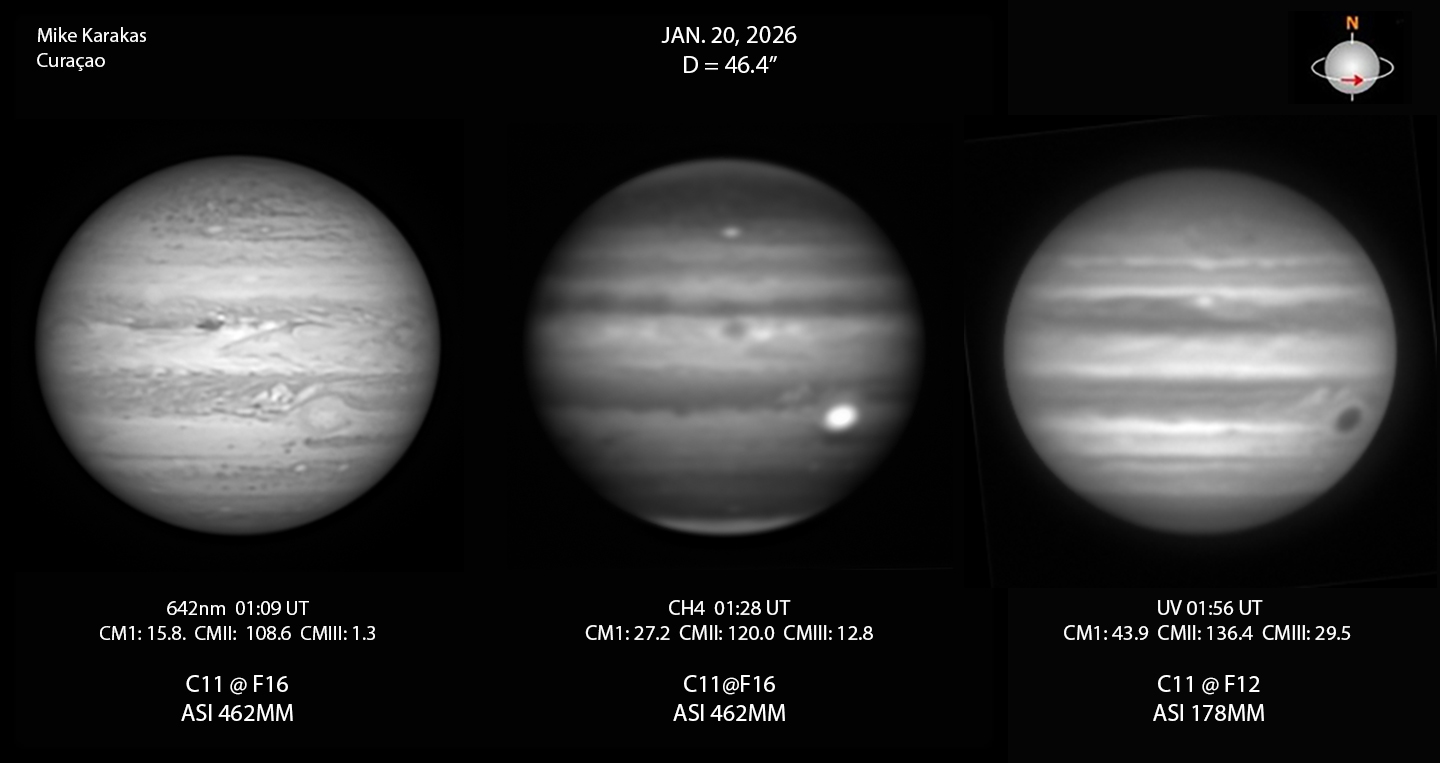
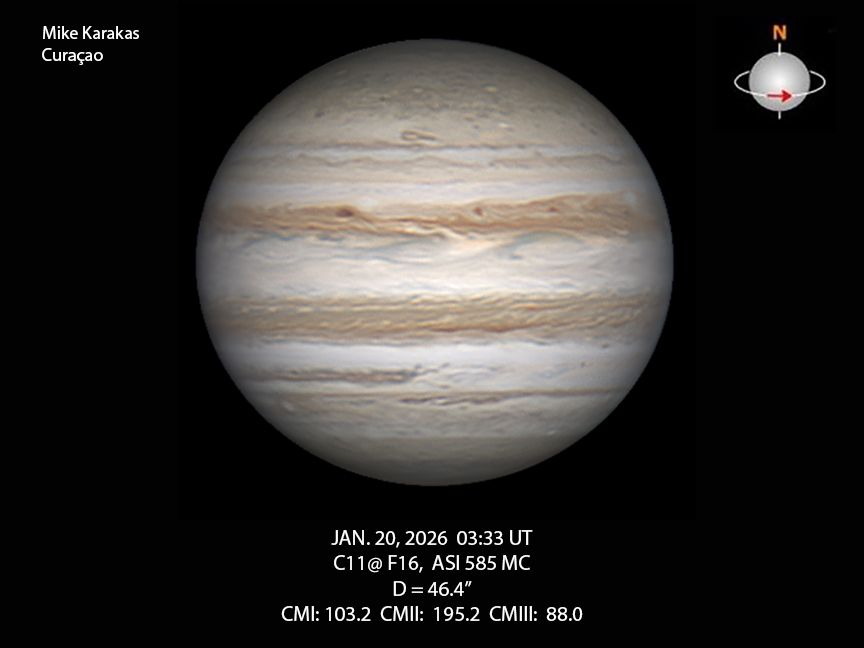 [Mike Karakas : Winnipeg Canada]
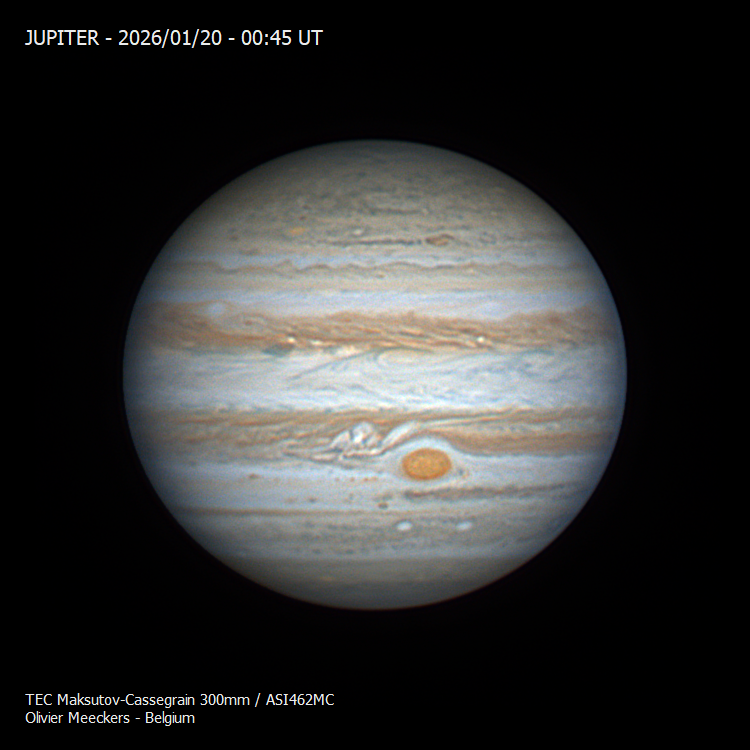 [Olivier Meeckers : Charneux,Belgium]
今夜も晴れたが風あり、不安定な気流。 メタン画像にはNTBに明るく見える場所(Ⅱ=185° +23°)は何でしょうか?
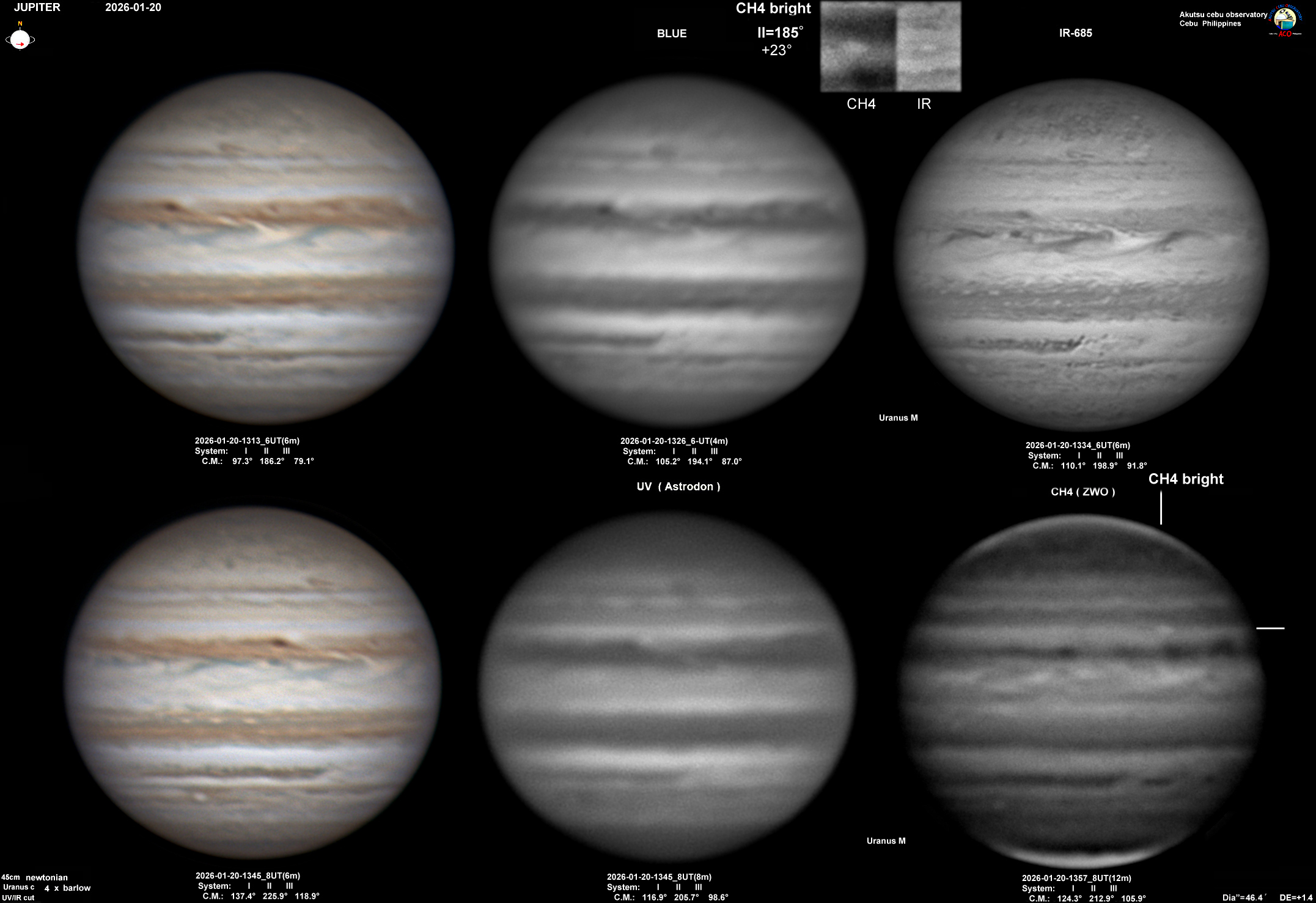 ≪Cebu PHILLIPINES 阿久津富夫≫
|
Christofer Mauricio Baez Jimenez |
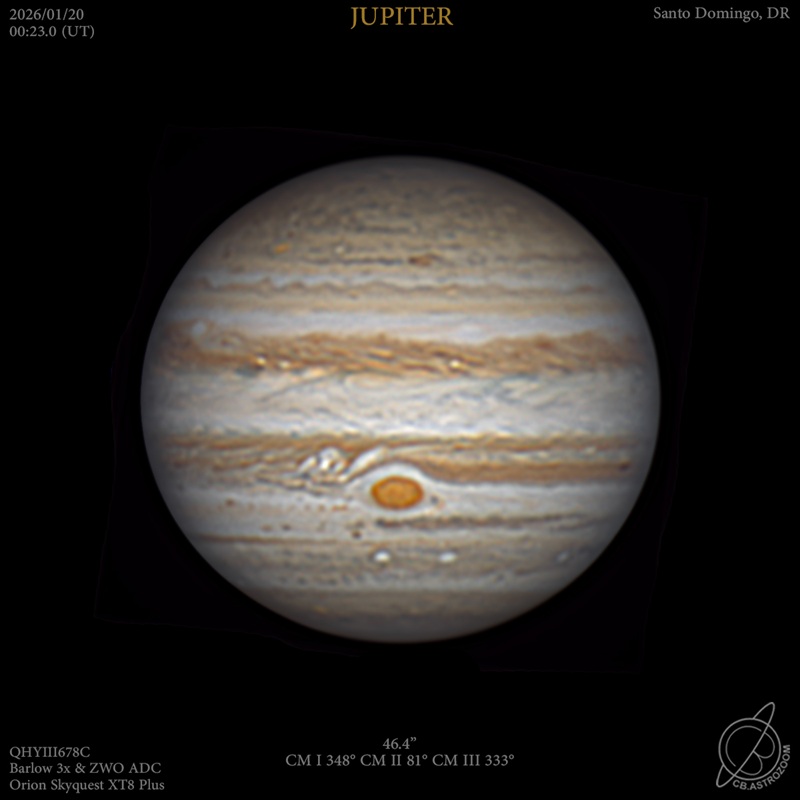 [Christofer Mauricio Baez Jimenez :Santo Domingo,Dominican Republic.]
晴れたので撮りましたが酷いシーイングで早々に撤収しました。
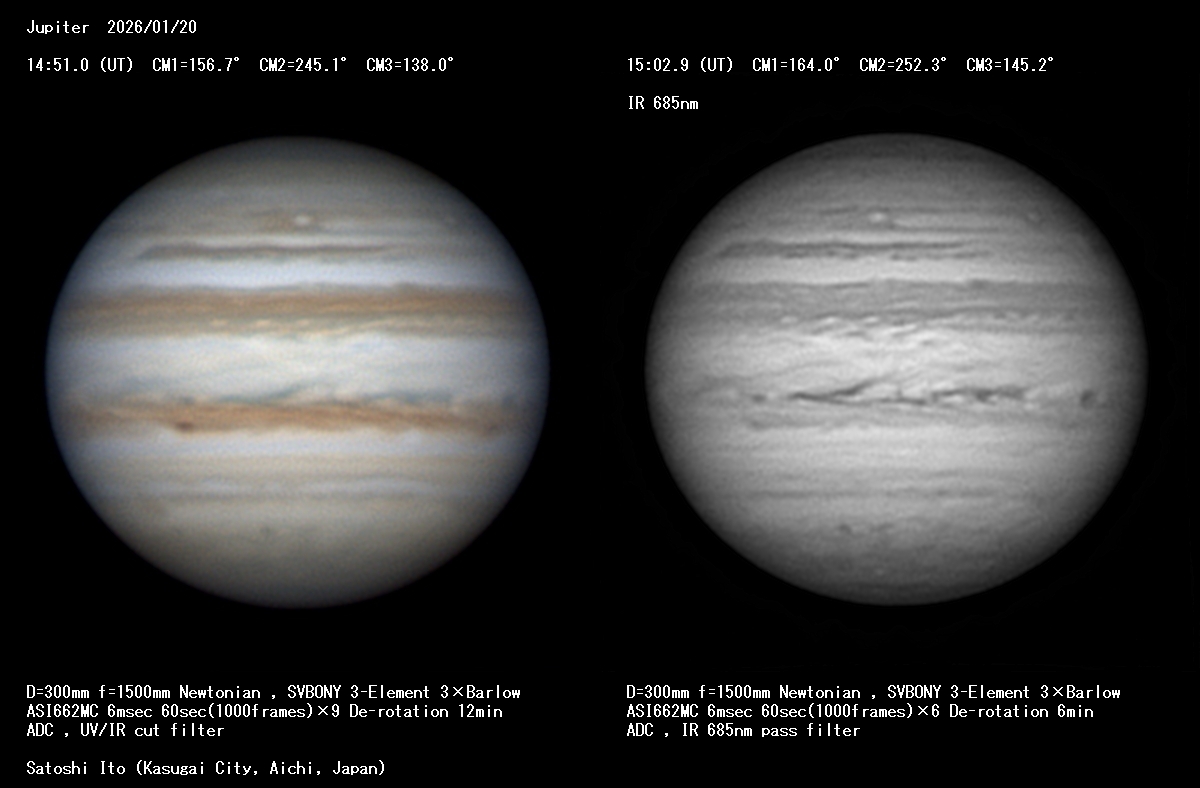 ≪愛知県 春日井市 伊藤了史≫[Satoshi Ito. Kasugai City,Aichi,Japan]
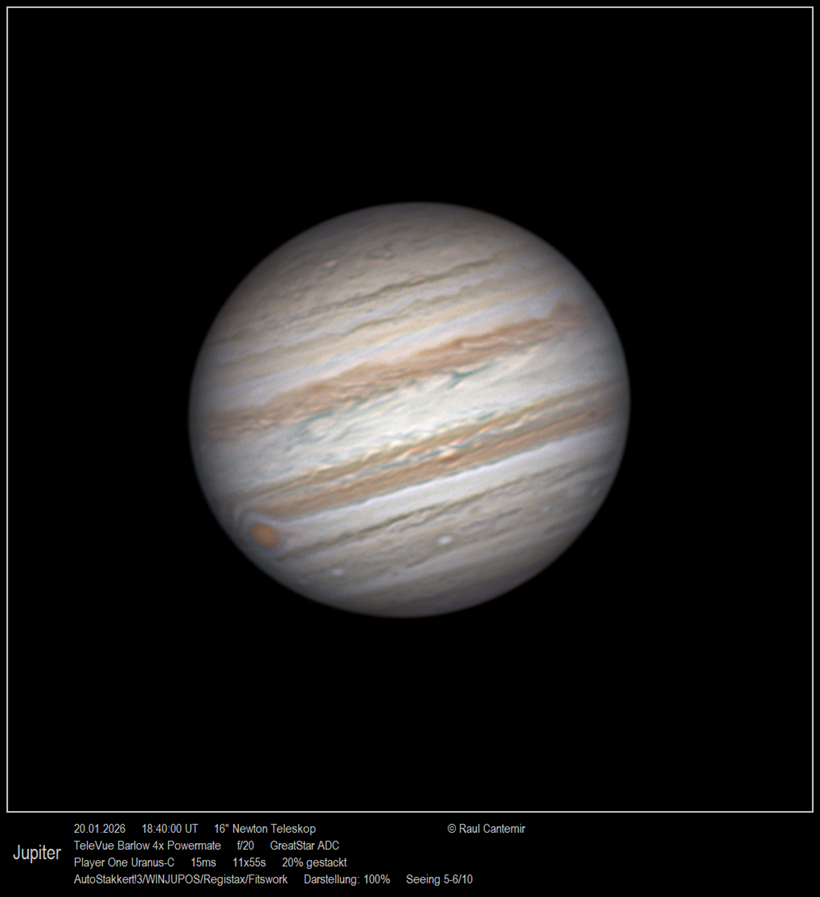
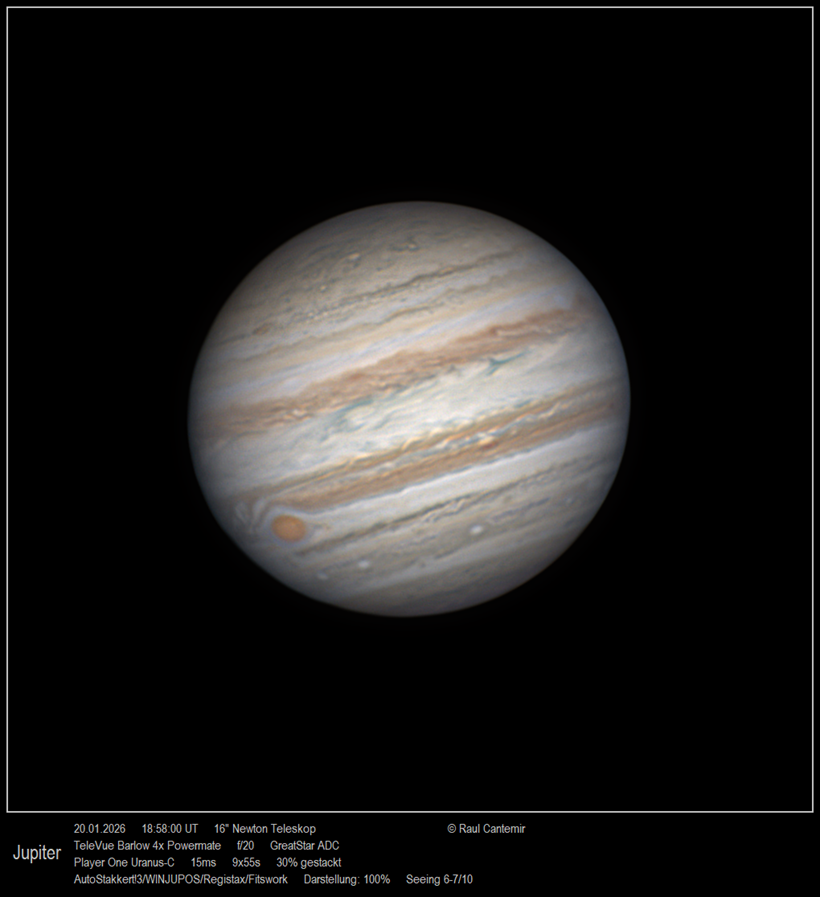
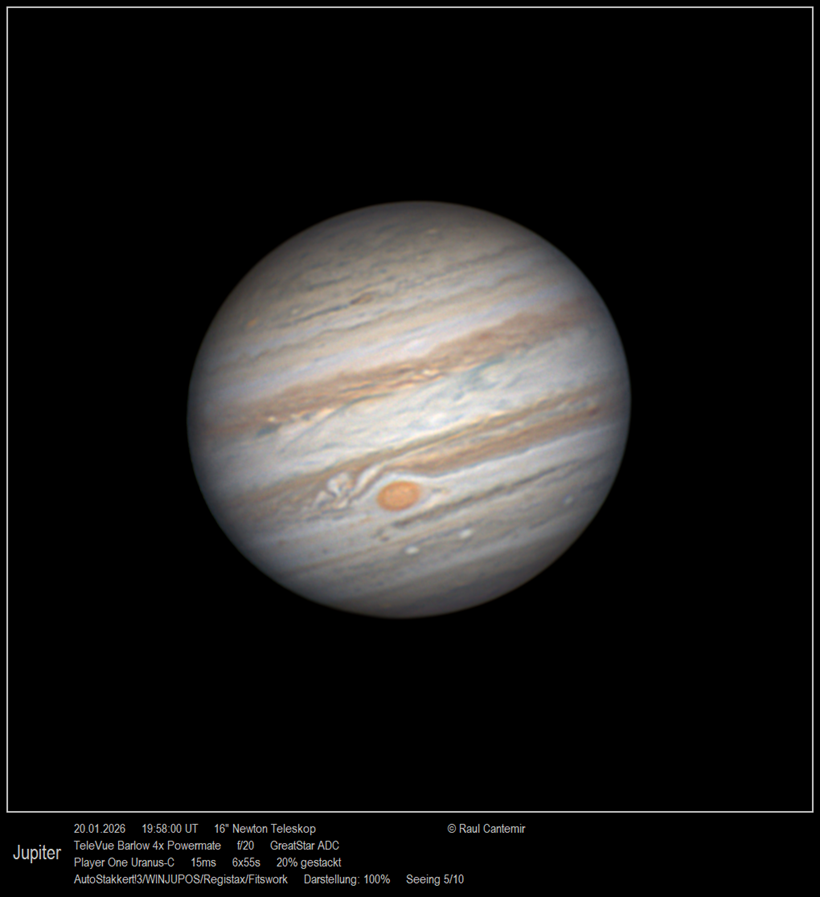 [Raul Cantemir : Darmstadt,Germany]
C14 f/22 + IR Pass 685
The Effect of Filters on Jupiter
Depending on the type of filter we use, Jupiter changes its appearance,
due to the fact that we are probing different atmospheric layers.
In the case of this photo, an IR 685nm filter and a methane 889nm filter were used.
In a simplified way, from the inside out, we have:
1. Deep cloud layers (Ammonia + ammonium hydrosulfide)
2. Visible main clouds (where bands and zones as well as the GRS are visible)
3. High-altitude fogs and aerosols
4. Upper layers rich in methane
Each wavelength sees as far as the atmosphere allows light to pass, therefore:
The IR 685 filter is outside the strong absorption of methane, suffers less atmospheric scattering,
penetrates deeper than visible light, and is little affected by poor seeing. In this way,
it shows the middle to deep layers of the clouds, the real structure of the bands and zones,
the internal turbulence of the bands, details within the GRS, as well as vortices and filaments that are washed out in RGB.
Typically, a No IR 685 photo gains high contrast, organic texture, light zones become less bright, dark bands gain definition,
and the GRS appears darker and more structured.
The Methane Filter strongly absorbs light in this band, so light from the lower layers does not pass through;
only what is above the methane-rich layer is visible. In this way,
it shows stratospheric hazes, the tops of the highest clouds, and convective phenomena that pierce the atmosphere.
In the photo, the planet becomes very dark, the light regions correspond to high clouds, the bands almost disappear,
and the GRS, as well as the poles, are very bright.
This makes methano extremely rich for studies of cloud height, convective phenomena, and the evolution of the GRS.
I hope that the next time you look at Jupiter with narrowband filters I can understand a little of what you're observing.
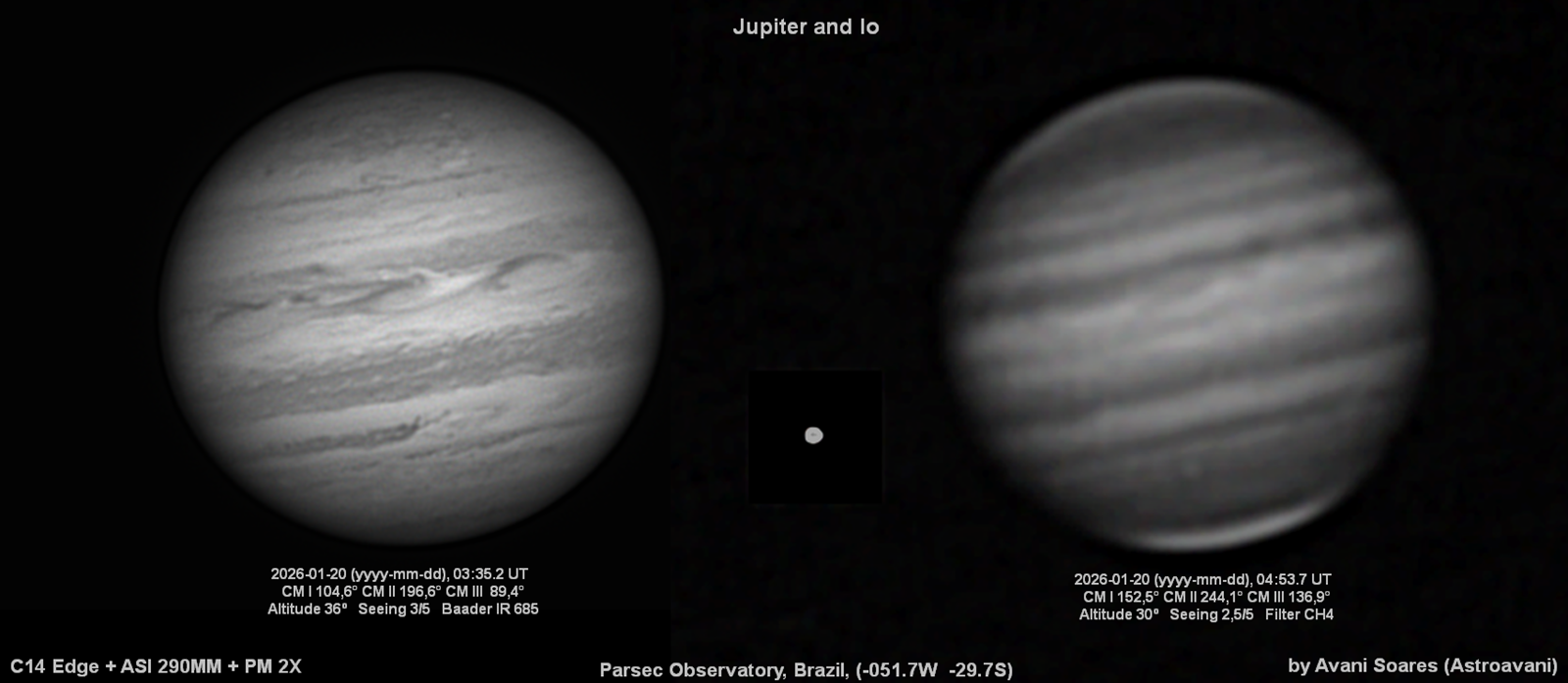 [ Observatory Parsec,City Canoas,Brazil]
 ALPO-Japan Latest
